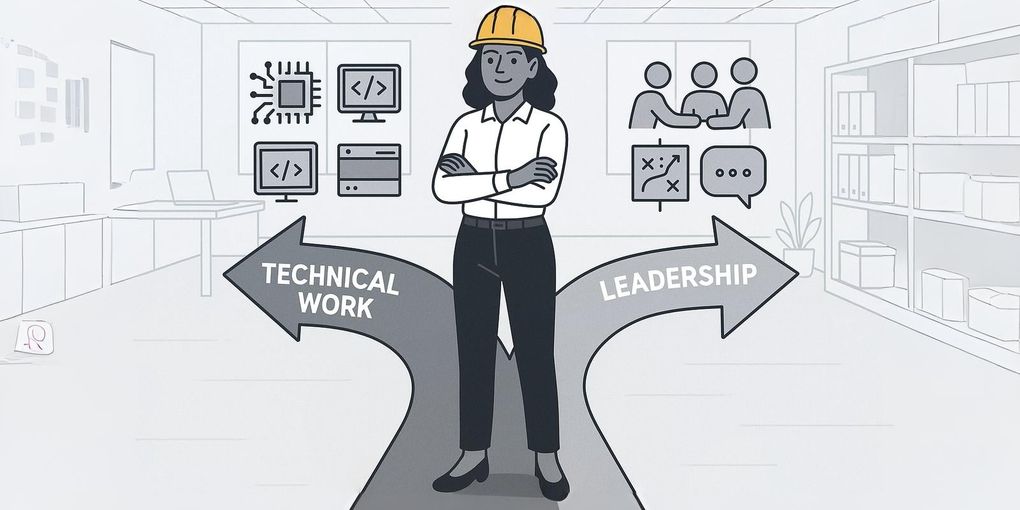
Becoming an Engineering Manager
Actionable insights for aspiring leaders making the jump to engineering management Get expert guidance backed by real experience.
Making the jump to engineering management isn’t just a job change. It’s a shift in how you think, act, and see your role within a team. Here’s a practical roadmap for anyone ready to make that move.
1. Understand What the Job Really Is
Engineering management isn’t just about overseeing code. You’re leading people, setting direction, and acting as the bridge between technical and business sides. The job demands more than technical skills—it’s about leadership, clear communication, and understanding how the organization fits together.
To prepare, start taking on leadership tasks where you are now. Step up for cross-team projects, mentor others, and work closely with teams outside engineering. You’ll see firsthand how complex—and rewarding—management can be.
2. Build the Skills That Matter
Great managers don’t just know technology—they know how to talk about it, make decisions, and keep things moving.
- Improve your communication: Take workshops, join speaking groups, or practice breaking down tough concepts for non-engineers.
- Get involved in strategy: Join planning sessions, ask to sit in on bigger meetings, and see how decisions get made.
- Get feedback: Ask your peers or mentors for honest input and work on weak spots.
- Learn decision frameworks: Study basic tools like SWOT analysis or risk management, so you’re ready to weigh options quickly.
3. Find Mentors and Keep Learning
No one figures out management alone. Find mentors—either inside or outside your company—who’ve done the job. Ask to shadow them, review real situations together, or get their take on your approach.
Go to industry events, webinars, or leadership workshops, and actually try out what you learn back at work. For example, if you pick up a new way to run meetings, test it out with your team.
4. Get Comfortable With Change
Management is unpredictable. Projects shift. People come and go. To succeed, you need to stay adaptable and resilient.
Take on projects that push you outside your comfort zone—especially ones that cross disciplines or require new skills. When things go sideways, take notes: What happened? What did you do? What would you change next time? This reflection helps you get better at handling uncertainty.
5. Try Before You Commit
Don’t wait for a promotion to start acting like a manager. Lead a small project. Mentor a new hire. Run a team meeting. Ask for feedback on how you did.
Where you fall short, make a plan: Maybe it’s a training course, maybe it’s more practice. Use these trial runs to build confidence and fill in gaps before you step up officially.
Bottom Line
Preparing for engineering management means taking initiative, seeking honest feedback, and pushing yourself beyond technical work. Stay flexible, keep learning, and use every experience as a chance to level up. The path is challenging, but it’s how real leaders grow.